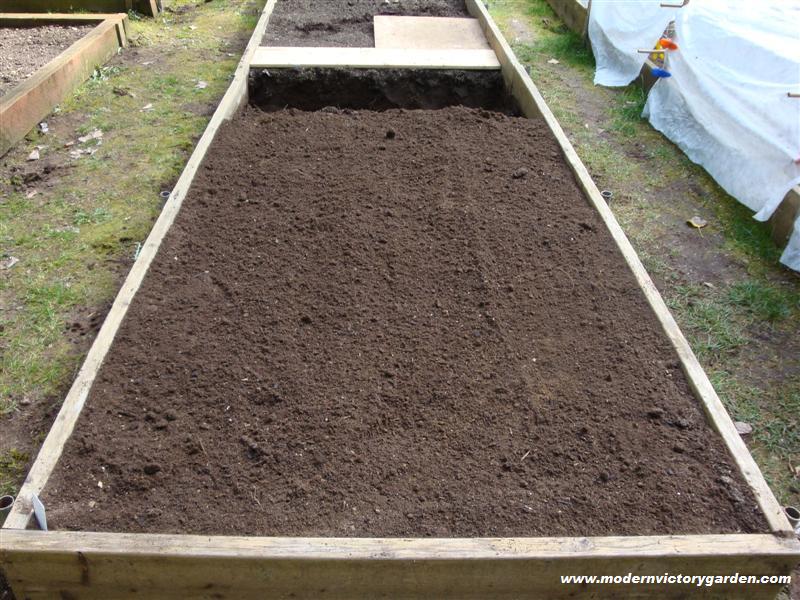
Growing a garden to provide a large proportion of your family's food - requires adequate space being dedicated to the growing of more calorie dense crops such as potatoes, carrots, parsnips, winter squash, and dried beans/grains (if you have adequate room). Since we have limited space on our property that gets sufficient sun - we choose not to grow dried beans or grains (purchasing these locally instead) - but we do grow a very large plot of potatoes each year and a variety of other calorie dense crops.
There are many ways to grow potatoes and over the years I have tried many of them with varying levels of success. In order to maximize the available space on our property and to facilitate season extending capabilities - we have set up our garden using raised boxed beds. The following is a recap of how I grow potatoes using a trenching technique within the raised boxed beds.
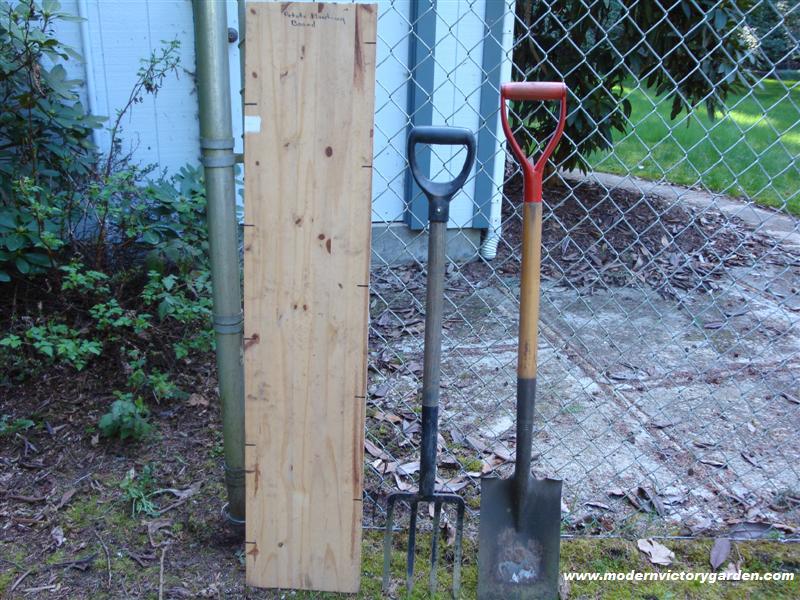
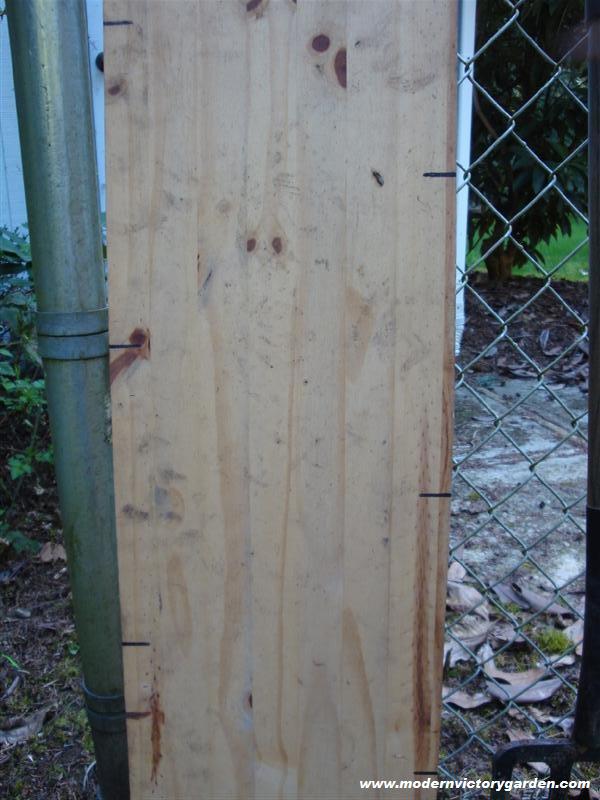
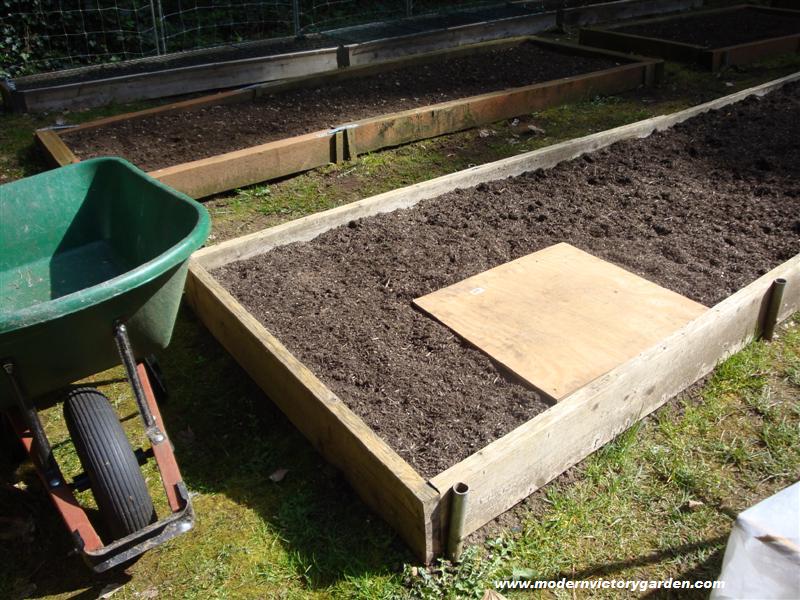
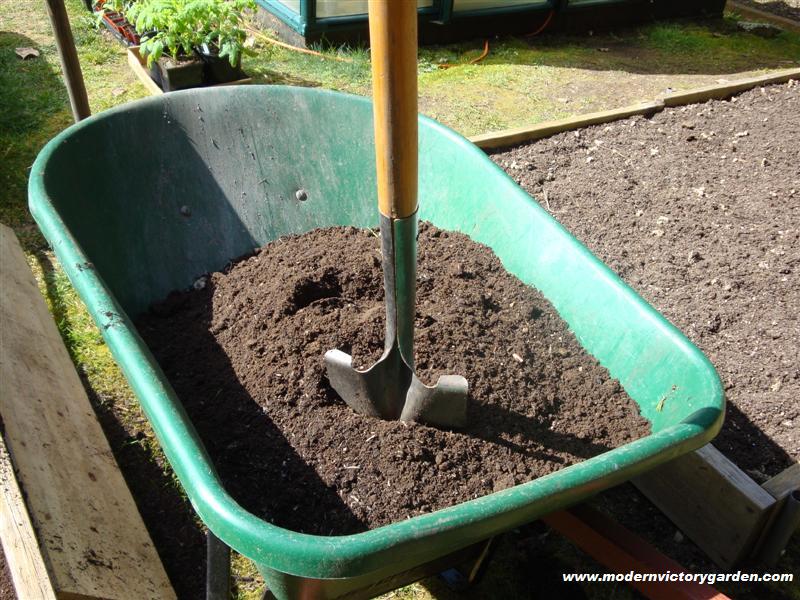
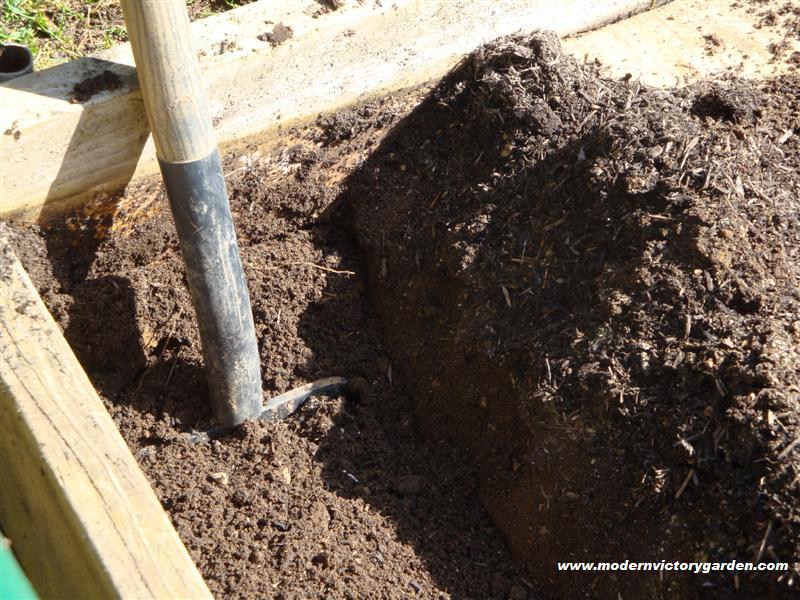
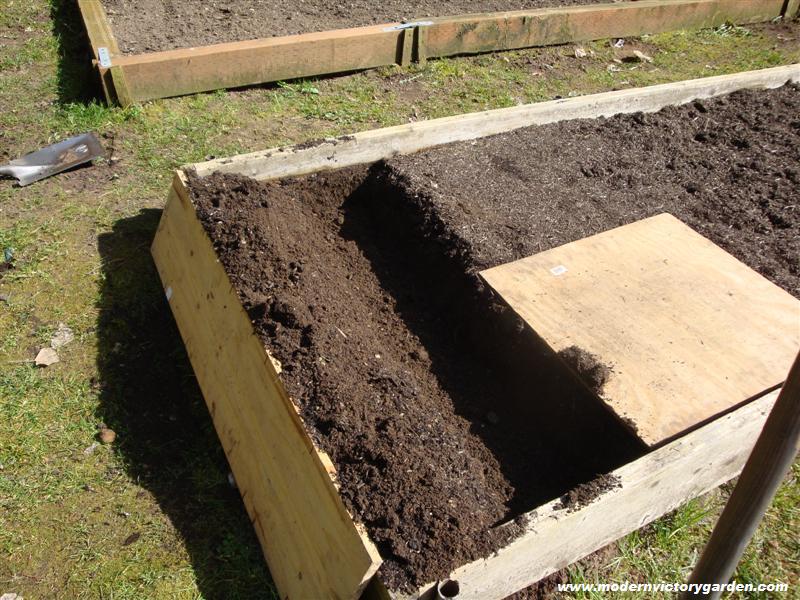
This is one of two large beds - prepped for planting potatoes. The bed was amended the previous fall with compost and had a green manure crop of crimson clover growing on most of it through the winter. The bed has been dug with trenches across the width of the bed. The trenches are the width and depth of a garden spade and are spaced approximately 2 to 3 feet apart from each other - to allow the soil from the trench to be mounded up next to the trench. If spaced too close to each other - the soil will just fall back into the trench. |
Photo Taken in Late March 2008
|
Photo Taken in Late March 2008 |
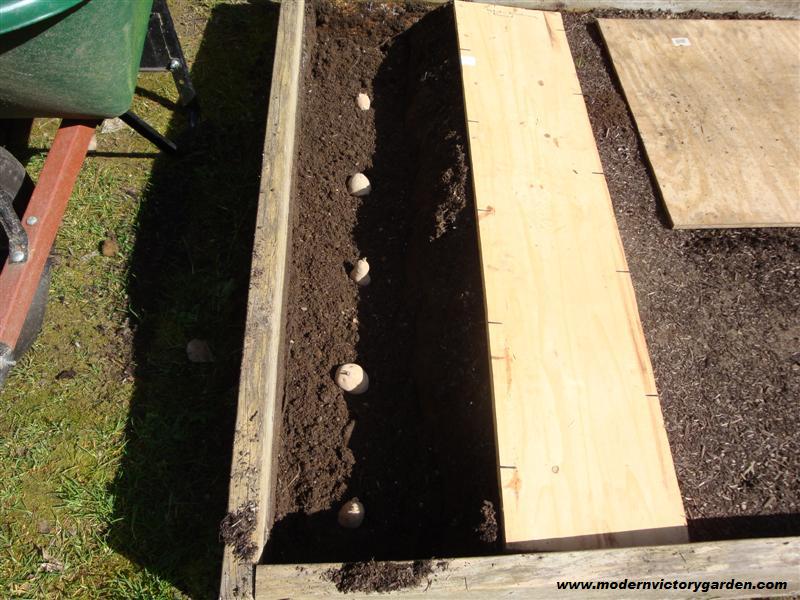
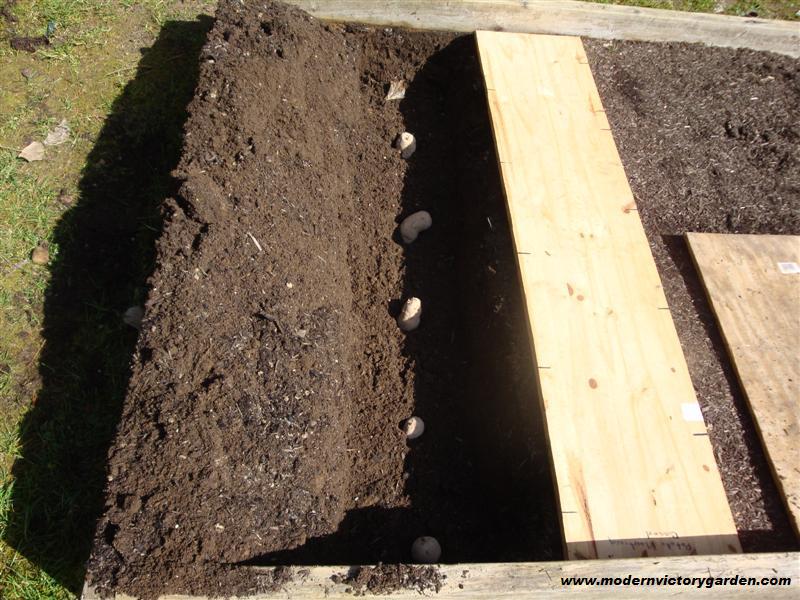
Most root crops - potatoes included - are fairly heavy feeders of phosphorous. Our beds have been previously amended with rock minerals (rock phosphate and greensand - and dolomitic lime where PH needs adjustment), but rock minerals are very slow acting and additional fertilizer is needed to provide for the heavy and immediate demands that a potato patch requires. Bonemeal provides phosphorous and to a lesser extent nitrogen - and is a good organic fertilizer for a potato patch. This sequence of photos shows bone meal sprinkled into the bottom of the trench and then being worked into the soil using a good sharp hoe. Care must be taken not to pull the soil from the side mounds down into the trench. The bottom photo shows the trench ready for planting with the bonemeal well worked into the soil and the soil at the bottom of the trench very loose and aerated. |
Place seed potatoes with eyes already pre-sprouted into the bottom of the trench - spacing approximately 8 inches apart. Using a hand spade, dig a four inch deep hole in the bottom of the trench at each spot where the seed potatoes are located and then drop the seed potato into it and cover with soil. Water the bottom of the trench well - soaking the soil thoroughly. Use care not to water the sides of the trench or the piled soil mounds - as it will wash soil into the trench prematurely. Should you receive a heavy rain shortly after planting and too much soil is washed into the trench - just come back after the rain with your garden spade and lift out the excess soil from the trench - placing it back on to the mounded piles. |
Photo Taken in Late March 2008 |
Photo Taken in Early May 2008
Photo Taken in Mid June 2008 | As the potatoes send up leaves through the soil, wait until they are emerged about 3 inches and then carefully pull down from the mounded soil a sufficent amount to fill in around the plants to where the leaves are just barely above the surface. The picture to the left which was taken in early May shows a trench after the soil has just been pulled down into it and spread around the emerging plants. Continue pulling the soil down into the trenches as needed to keep the plant foilage just barely above soil level. If rains wash soil down into the trench - only remove it if the amount is excessive and covers the plant in it's entirety. Once all the soil from the mounds have been refilled into the trenches - step back and watch them grow! When the plants start flowering, it is a good time to apply a side dressing of fertilizer using an all purpose organic fertilizer scratched into the soil next to the plants and then watered in. After the plants have flowered - you may begin harvesting new potatoes as you desire.
|
As you can see in the first two photos to the right, this potato patch has had it's vines die back - until the top foilage was essentially withered completely away. When your plants have died back like this - stop watering the bed in order to let the soil dry out somewhat - just prior to harvesting. I use a plain garden fork to do the lifting of potatoes. This sequence of photos shows my early and mid season varieties being harvested - "Yukon Gold" and "Caribe". Carefully dig down into the trench area and lift out the soil and embedded potatoes. You will need to set the soil to the side and continue the digging and lifting quite deep into the trench. Proceed across the bed carefully pulling and lifting the potatoes out of the soil. If you are like me, you will accidentally skewer more than a few of the potatoes in the process. Put them aside in a seperate spot so that you can use them for cooking as soon as possible. Do not store potatoes that have been damaged - cut, bruised, or skin scraped off. Instead, use those for your immediate cooking needs and use the remaining - undamaged potatoes - for longer term storage. The photo on the right shows a pile of Yukon Golds set out to dry off a bit, and a pile of Caribe potatoes. The white container holds all of the potatoes that I damaged somewhat in the harvesting process. They will go to the pantry and be used up over the next few weeks. This harvest is from a section of bed measuring 4'X20'. There were 15 lbs of "damaged" potatoes (Yukon Gold and Caribe combined), 26 lbs of Caribe and 19 lbs of Yukon Gold. For a total of 60 lbs from this section. I estimate we have 60 more pounds of Russet potatoes in the ground in another garden bed and I previously harvested about 40 lbs from the garden throughout the summer for fresh eating and for canning (new potatoes). |
|
| | Before you get started, be sure to set aside the smaller and some of the medium sized potatoes for your next growing season seed potatoes. I like to store my potatoes in sturdy cardboard boxes. Banker boxes or copier paper boxes work very well. I use a hole saw drill bit attachment for our drill - and punch a few holes in the side of the box to provide greater ventilation for the stored potatoes. I then place a layer of shredded paper (all those credit card and "convenience check" offers are going to finally be good for something!) in the bottom of the box and then carefully layer in the previously selected unbruised - undamaged potatoes. Do not clean them other than slightly brushing off the dried dirt from the potatoes. The idea is to keep the skin dry and intact for good storage. Top the first layer with more shredded paper and then add another layer of potatoes. Top it with paper as well. I can get as much as three layers in a box if the potatoes are medium sized - two layers if the potatoes are quite large. The top should have some more loose shredded paper placed on it and then the box cover firmly set in place. Don't forget to note on the box what the contents are - including the variety. The sturdy box is now ready to be stored away to await later usage. Potatoes store best in a cool - slightly damp environment - but should not be subjected to freezing. It is also important not to expose them to very much light - as they will begin sprouting if exposed to light and warmth. I place the boxes on rubbermaid shelving in our garage - which is the coolest and dampest place on our homestead. When you have used all the potatoes in the box - the shredded paper can be added to your compost pile for further recycling/reuse. |
Hopefully you remembered to set aside good condition small and medium small potatoes from your harvest to store for next year's seed potatoes. It does not take a huge amount of potatoes to provide your next year seed and smaller potatoes work fine and do not require cutting up before planting. The potatoes pictured here are a variety called "Red Cloud". The process is exactly the same to store your seed potatoes - as the potatoes you are storing for later consumption. The biggest difference is that you need to store far less of them and they will be stored for the entire winter. I use a smaller ventilated box to store them in and use small to medium/small potatoes. I also tend to keep them spaced further apart from each other - as they must go much longer in storage and the more ventilation they have - the less likely you are to have spoilage. Compare the spacing in this box of seed potatoes to the previous photo series on storage - noticing how much further apart they are spaced? Similar to the harvest storage - use shredded paper to layer the potatoes with and then when completed - seal the box up. I use some strapping tape to close up the boxes. It is very important that you mark the box with the variety of potato inside - so that you can be sure what variety you are planting come next spring! Here's the finished box of Red Cloud potatoes and two boxes that hold the Caribe (biggest box) and the Yukon Gold potatoes. These are placed on a shelf in the garage and kept stored there until the following spring - at which time they are pulled out of the boxes and allowed to be exposed to indirect sun to encourage sprouting about a week or two before planting. I have had good success storing my seed potatoes in this manner. |